space · FOLLOW YOUR CURIOSITY
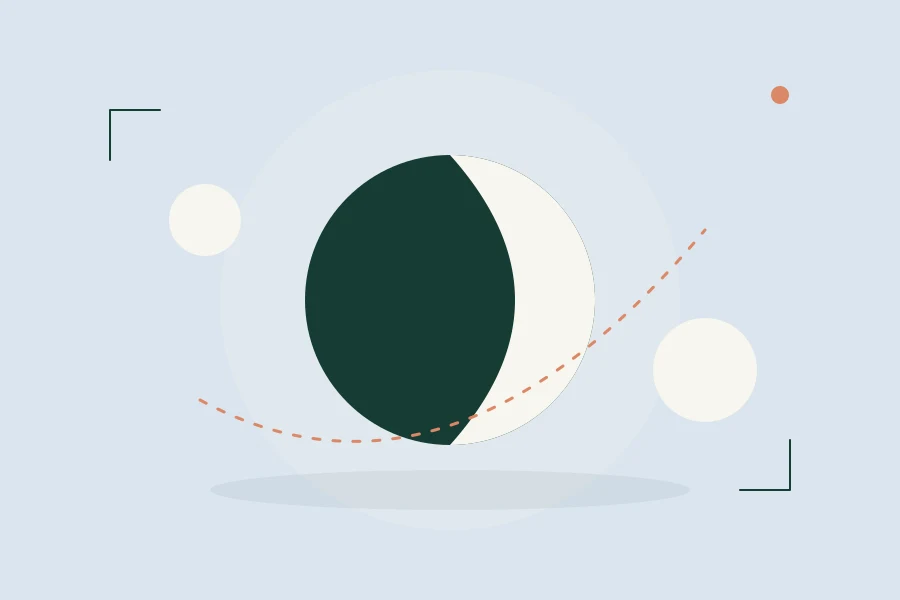
The Moon changes its look, not its shape.
A crescent and a full Moon are different views of the same sunlit world.
Explore the interactive discovery →
One Moon, changing geometry
The Sun illuminates roughly half of the Moon. As the Moon travels around Earth, our view of that illuminated half changes. The familiar sequence of phases repeats in about 29.5 days.
Is a crescent normally Earth’s shadow covering the Moon?
Reveal the idea
No. We are seeing only part of its sunlit half.
Earth’s shadow causes a lunar eclipse. Ordinary phases come from the changing positions of the Sun, Earth and Moon.
A useful distinction
At full Moon, the sunlit side faces us. At new Moon, the side facing Earth is mostly unlit. The Moon remains a sphere throughout: what changes is the portion of the lit surface visible to us.
AN IDEA TO TAKE WITH YOU
A lunar phase is a change in our view of sunlight, rather than a change in the Moon itself.
Follow a connection
The Moon keeps a record Earth keeps erasing. →
Look beyond the changing light: the marks on the lunar surface tell a much older story.
Sources and transparency
NASA · Moon Phases
Accessed 2026-10-24
Prepared with AI assistance. Illustrations are explanatory, not evidence. You can report an issue in the interactive discovery.