science · FOLLOW YOUR CURIOSITY
Why is the sky blue if sunlight looks white?
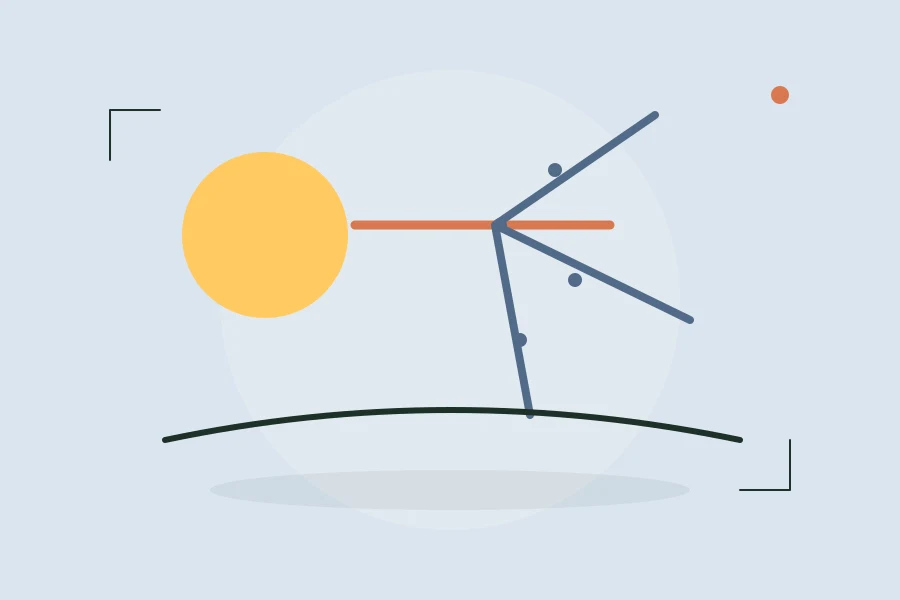
The colour above you is a clue to a journey. Sunlight changes direction when it meets the atmosphere.
Explore the interactive discovery →
Start with what you see
Sunlight contains a range of visible wavelengths. Air molecules scatter shorter visible wavelengths more strongly than longer ones. Looking away from the Sun, you receive some of that scattered light from across the sky.
What is happening?
Near sunset, direct sunlight travels through more atmosphere. More short-wavelength light is scattered out of that path, so the remaining direct light can look warmer. Clouds and particles also affect the colours you see.
Try a concrete example
Compare two viewing directions: towards the Sun near the horizon and towards a clear part of the sky away from it. You are not sampling light that followed the same route. The first can include sunlight that has travelled through a longer atmospheric path; the second includes light scattered towards you. This distinction helps connect a blue daytime sky with warmer sunset colours. Clouds, dust and viewing conditions complicate the picture, so the simple model is an explanation of a mechanism, not a colour forecast.
AN IDEA TO TAKE WITH YOU
The sky’s colour comes from light interacting with the air.
Follow a connection
Why does the Moon seem to change shape? →
Light explains the sky’s colour. Its geometry also explains the Moon’s changing appearance.
Sources and transparency
NASA · Why Is the Sky Blue?
Accessed: 2026-10-31
Met Office · Why the sky is blue and sunsets red
Accessed: 2026-10-31
Illustrations explain an idea. Sources are available above.